


How will open banking affect financial services in South Korea?
South Korea has been something of a fintech laggard compared to its neighbors in East Asia. Demand for native digital banking services among Korean consumers and businesses is robust, but regulators have erred on the side of protecting incumbents. South Korea’s Financial Services Commission (FSC) even rejected all the applicants for virtual-banking licenses earlier this year.
The arrival of open banking could give South Korea’s financial services sector a much needed shot in the arm, improving consumer choice and pushing banks to up their game. Customers would be able to manage multiple accounts and withdraw and transfer money from a single smartphone app.
Fintechs are currently barred from directly accessing Korea’s payment network for money transfer services. They must instead partner with banks to provide payment services through their respective platforms. For that privilege, fintechs pay a commission to banks on each transaction.
Open banking could level the playing field for fintechs, but only if regulators are willing. Currently, they’re sitting on the fence – as we can see from the conservative open banking pilot program launched October 30. The 50-day pilot is reserved for 10 major Korean commercial banks. On Dec. 18 – the formal launch date of South Korea’s open banking system – an additional eight banks and more than 100 fintech firms are expected to join. Notable fintechs expected to join include the unicorn Viva Republica, which operates virtual bank hopeful Toss, Naver Pay, the mobile payment arm of the Korean internet giant, and Rainist, which operates online wealth manager Banksalad.
Unsurprisingly, the firms which have to wait until December to join the program are concerned that they will be at a disadvantage. That fact that not a single fintech firm was able to join the pilot doesn’t look like a vote of confidence in digital banking from the FSC.
The regulator is also planning to require fintechs joining Korea’s open banking program to access the network through banks’ systems, not their own. Reportedly, the FSC believes that policy will ensure better data security.
With regards to expanding the open banking system, the FSC has emphasized it will allow savings banks and the postal service to join. “We’ll actively review expanding the service, so more banks can join the program,” Song Hyun-do, director of the FSC’s Financial Innovation Bureau, told The Korean Herald in November, adding that the regulator did not intend to “alienate non-financial institutions.”
Meanwhile, thus far it appears that Korean consumers are eager to try open banking. By the first week of November, 1.2 million customers had created 1.8 million accounts with the open banking app service, The Korea Herald reported.

Related Blogs
Related posts

Stablecoins: The future of trade settlement and treasury management
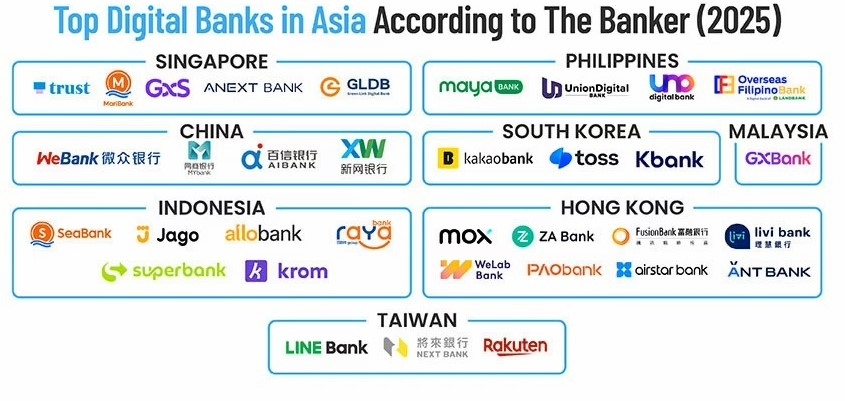
Top digital banks in Asia and how they are reshaping finance in 2025


Bitter lessons from Chocolate Finance: A cautionary tale in fintech